What You See in the Colosseum Underground, Stop by Stop
The Colosseum underground route stop by stop: the hologram exhibition, the lifts and the replica, the corridors from the walkway, plus photo tips and what to wear.
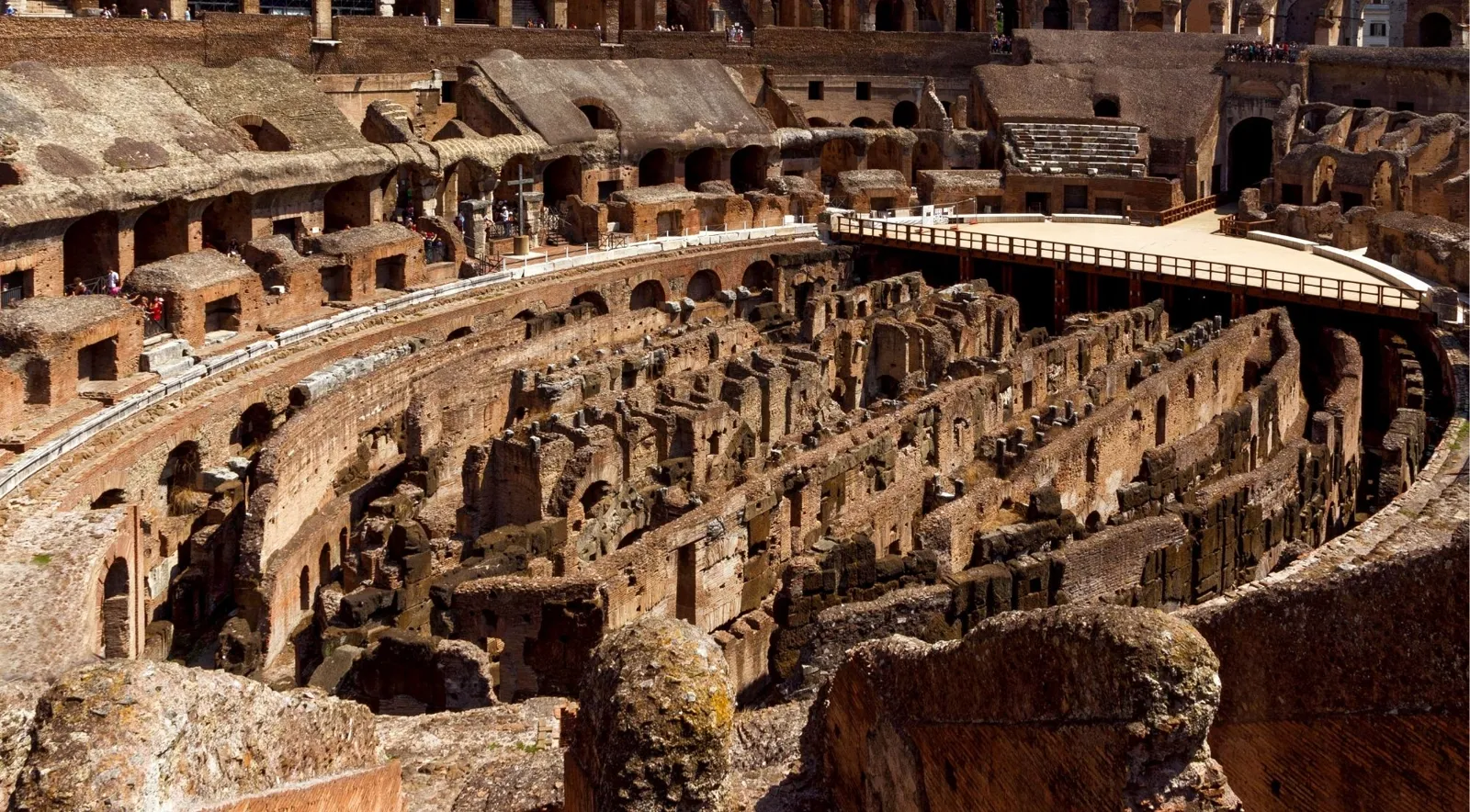
Underground, you see the Colosseum from the performers’ side: the backstage corridors where animals and fighters waited, the shafts that lifted them into the arena, a working replica of one of those lifts and an exhibition where holographic gladiators step out of the dark. You see it all from a raised walkway on a fixed route, and most of it lies open to the sky.
Set your expectations before you go. The hypogeum is a clean, conserved archaeological site, not a dungeon set, and apart from the exhibition there are few objects to look at. What you get is the layout itself, close up, and a guide or the park’s staff explaining how it ran.
This page follows the route in the order the Colosseum Archaeological Park describes it, then covers what it feels like, photos and what to wear. For the history behind what you see, read what the Colosseum dungeons really were.
Check Availability
How the underground visit runs
You never wander the underground on your own. Every visitor goes down in a group on a fixed route, and the arrangements depend on how you booked.
On the park’s own Full Experience Underground and Arena ticket, you enter in accompanied groups of up to 25 people, with a new group starting every 15 minutes. You need to be at the entrance 30 minutes before your ticket time, because the park does not tolerate lateness, according to the official opening times and tickets page. Once inside, Full Experience tickets allow up to 90 minutes in the Colosseum as a whole, which includes the arena and the underground.
On a guided tour, the group is smaller. The park’s regulation for guided tours in the underground lets each licensed guide take at most 6 clients below the arena, 7 people with the guide. Larger guided groups are not admitted to the underground, so check the group size on any tour you book.
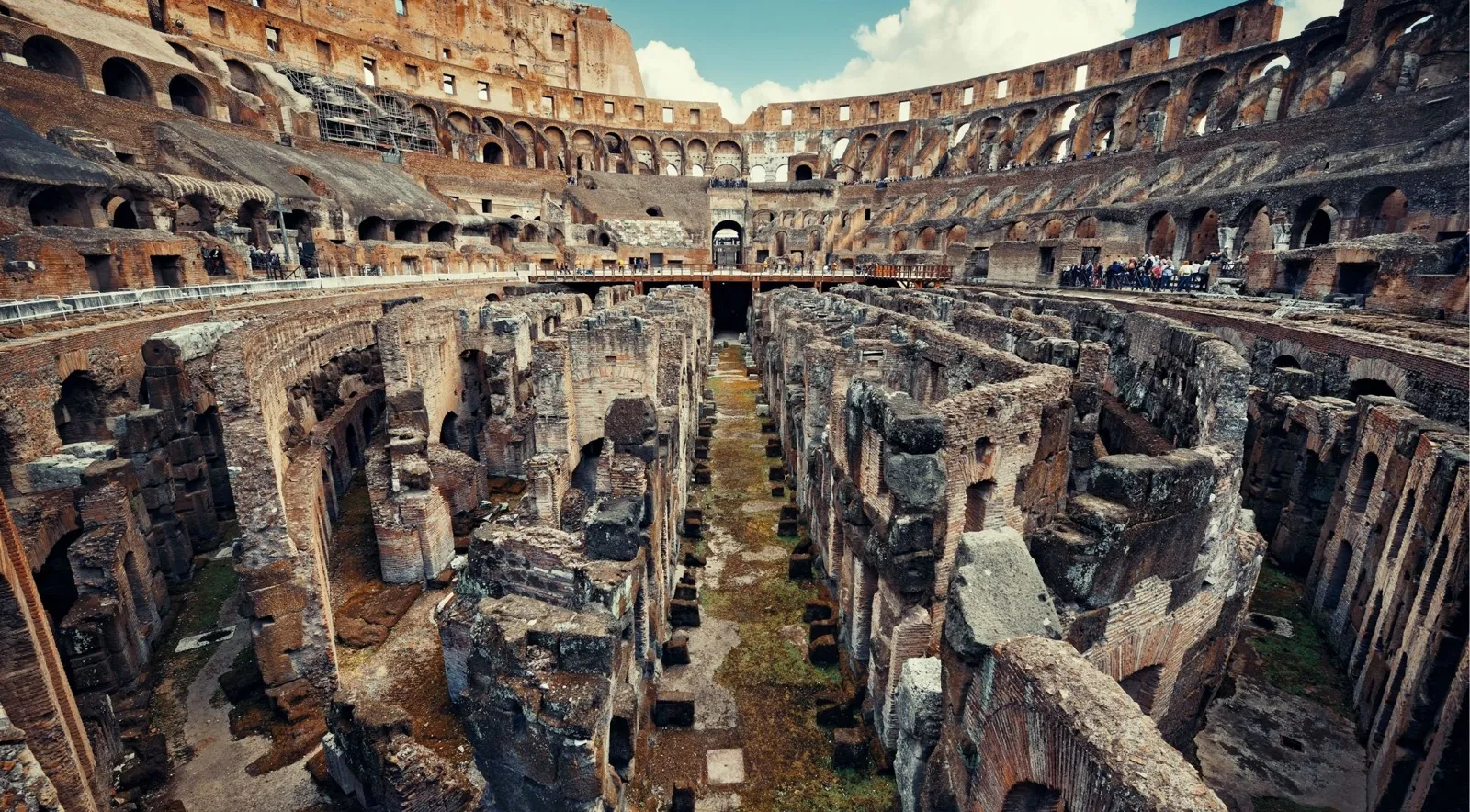
Either way, you walk the same raised walkway. It runs through the corridors at a fixed height, with railings, and you can’t step off it into the remains. That set route protects the archaeology and keeps groups moving, so stopping for a long look depends on your guide and the group behind you.
The route, stop by stop
1. The descent
You go down from the arena level into the hypogeum. The first thing you notice is scale: from the tiers the corridors look like a model, and once you are among them the walls rise well above your head.
2. The exhibition in the eastern cryptoporticus
The first long stop is the permanent exhibition on the protagonists of the shows, set in a covered vaulted gallery on the eastern side. Holographic projections of gladiators emerge from the dark, alongside original finds, short videos and reconstructed armour. It is the one part of the route with objects in cases, and the only properly covered section.
3. The Labicano ditch and the eastern manoeuvring chamber
Next come two stops the park names on the eastern side: the Labicano ditch and the eastern manoeuvring chamber. These were working spaces for moving people, animals and equipment through the underground. Without explanation they read as bare stone rooms, so this is where a guide’s commentary matters most.
4. The lifts, hoists and the 2015 replica
The route then reaches the lift system. The original wooden machinery has gone, but the stone shafts and housings along the walls show where hoists and platforms once stood. Here you also see the working replica lift and trapdoor unveiled in June 2015, about 7.5 metres (25 feet) tall and turned by up to eight people. Standing next to it helps you picture the 6-metre lift from the corridor floor to the arena.
5. The walkway through the corridors
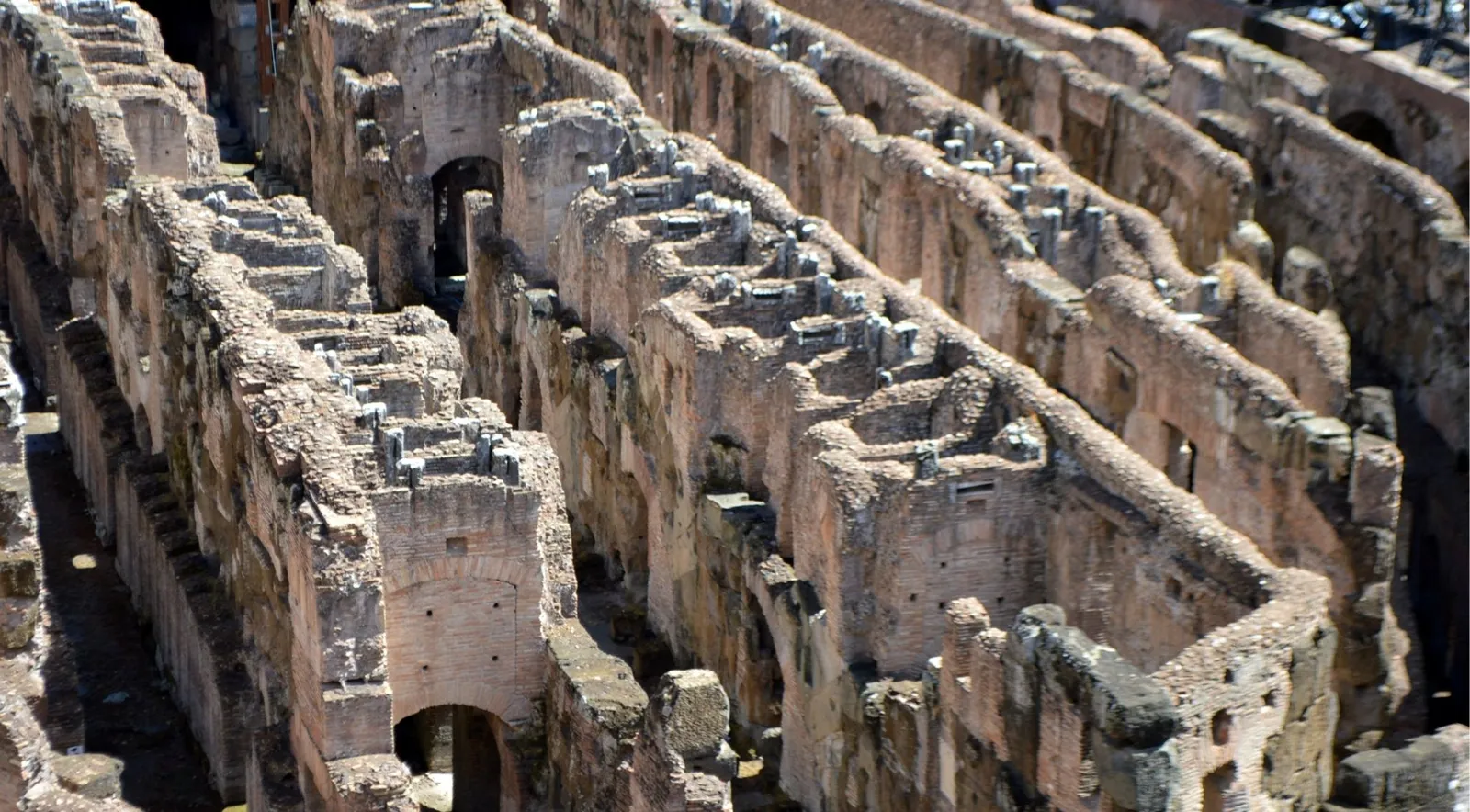
The longest stretch follows the walkway, 160 metres in total, through the perimeter and straight corridors. The park counts fourteen corridors visible in the remains, laid out symmetrically on either side of the large central corridor, across about half a hectare. From the walkway you look along them one after another, which is the best moment to understand how the whole grid fitted together.
6. The western manoeuvring chamber
The walkway brings you out at the western manoeuvring chamber, the western counterpart of the eastern chamber you passed earlier.
7. The exit under the Triumphal Gate
You leave by the stairs under the Triumphal Gate, the Porta Triumphalis. Look back from the top of the steps for a last view down the line of corridors you have just walked.
What it looks and feels like
The hypogeum is open to the sky. The original arena floor has gone, apart from a rebuilt section on the eastern side, so daylight reaches almost the whole route and you can see the tiers of the Colosseum above the corridor walls. Most people don’t feel closed in. The corridors are narrow in places, and the exhibition gallery is covered and dimmer than the rest.
It isn’t scary. There are no recreated cells or sound effects, and the holograms are the only staged element. If you are bringing children, the exhibition and the replica lift give them the most to look at; there is more in our guide to the underground with kids.
What to expect, honestly
Some visitors come away disappointed, usually because they expected something else. Three things are useful to know in advance.
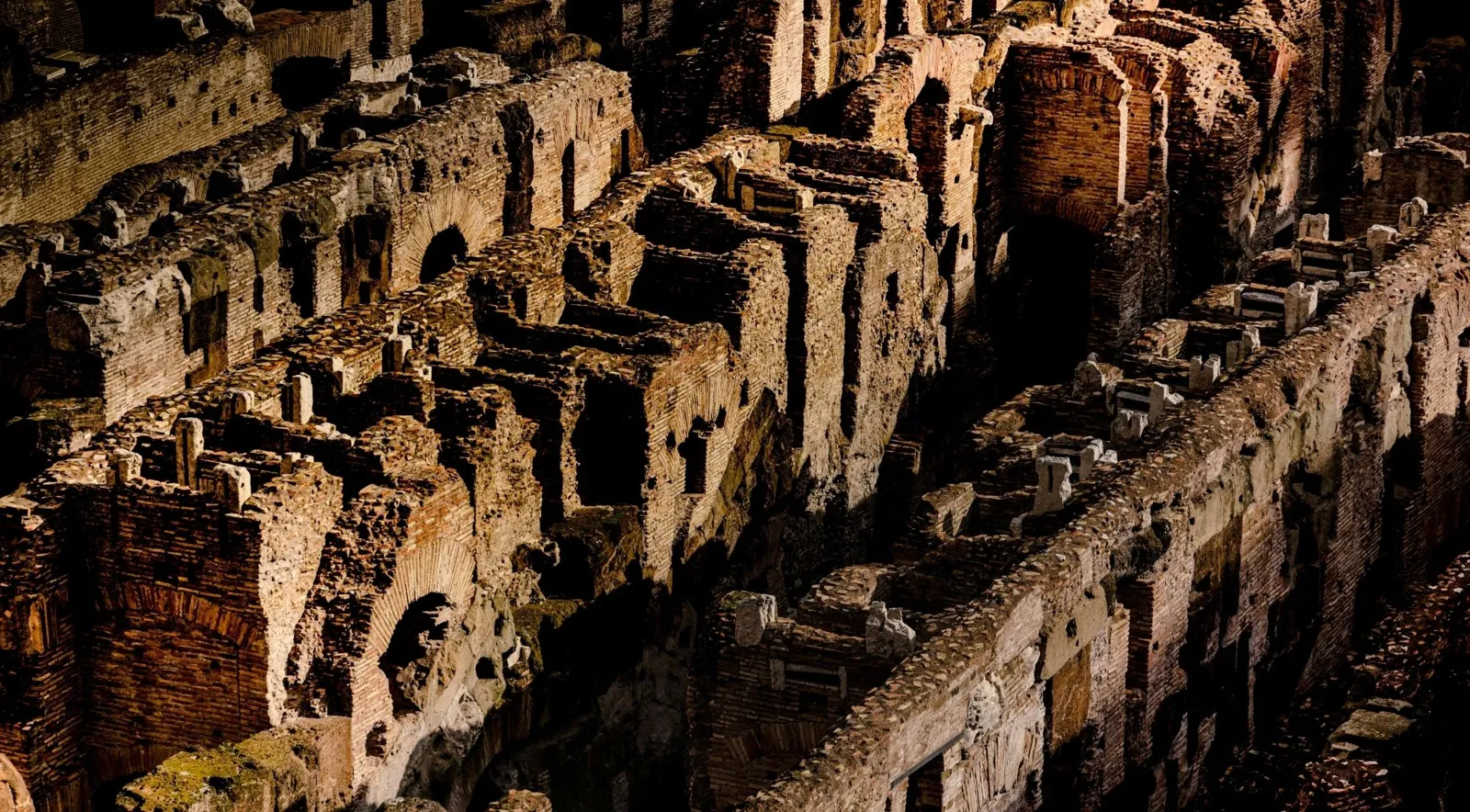
The site is clean and conserved. You see walls, floors and shafts, all stabilised and tidy, with few artefacts outside the exhibition. It looks like an excavation, and it is one.
It can feel short. The underground is one part of a visit that also includes the arena, and on the park’s ticket the whole Colosseum visit is capped at 90 minutes. Groups move at a steady pace to keep the 15-minute rhythm, and reviewers sometimes mention that the underground part went quickly.
A guide changes what you take away. To an unprepared eye the corridors are a maze of similar walls. Someone explaining what each space did, where the cages came up and how many people turned each capstan turns that maze into a working machine. If you go on the park’s ticket, read up first.
Weather matters too. Heavy rain closed the underground and arena on 12 February 2026, and the underground shut from 08:30 to 10:30 on 8 October 2026. If rain is forecast for your date, check the park’s notices on the morning.
Photo tips for the underground
The light is good for photos most of the day because the route is open. A few tips help:
- Shoot along the corridors, not across them. The parallel walls give strong lines that lead the eye.
- Frame the tiers above the corridor walls to show where the underground sits in the building.
- Take a picture of the replica lift with a person beside it for scale.
- In the exhibition gallery, switch off the flash and let the holograms provide the light.
- Selfie sticks are banned in the Colosseum, and professional photo or video equipment and drones need written permission, under the park’s visitor rules.
Shoes, bags and toilets
Closed shoes suitable for uneven ground are a requirement of the park’s rules, not only a suggestion, so leave sandals at the hotel. Bags must fit within 30 × 40 × 15 cm, there is no cloakroom or luggage storage, and everyone goes through a metal-detector check at the entrance.
Use the toilets before your group goes down. The underground part runs as an accompanied group on a fixed walkway, and you can’t step away from it to find facilities. Eating is not allowed anywhere in the Colosseum.
For wheelchair users, the park’s accessibility page says access to the underground is provided by a freight lift, but that page is partly out of date. Confirm with the park before booking.
Choosing how to see it
You can see this route on the park’s €24 Full Experience Underground and Arena ticket, or with a guide who explains each stop. For a guided visit where the underground is part of every option, the Colosseum, Underground, Roman Forum and Palatine small-group tour takes up to 7 people, includes the Forum and Palatine with the guide and costs from $211 per person, rated 5.0/5 from 95 reviews. Our breakdown of that tour has the details. To see how the underground compares with an arena-only visit, read the underground versus the arena, or go back to the homepage to compare every guided option.
See How the Colosseum Worked, Not Just What It Looked Like
Underground places go fast, and guided groups below the arena are capped at six guests per guide. Check dates on our top pick, a small-group tour of the underground, arena, Forum and Palatine.
Check Dates & Availability